As cloud-native development becomes the norm, two types of security checks are becoming essential: Infrastructure as Code (IaC) scanning and Cloud Infrastructure scanning.
Both help reduce risk, but at different stages. Understanding how they work, when to use them, and why they matter can help your team build and maintain more secure systems.
What is IaC Scanning?
Infrastructure as Code (IaC) allows teams to define infrastructure—such as servers, networks, and permissions—using configuration files.
IaC scanning checks these files before deployment to identify potential misconfigurations or security issues. This is a proactive step in securing cloud environments before they go live.
Unlike traditional vulnerability scans, IaC scans focus on the code itself, not what’s running in production.
Example:
Your IaC file defines a storage bucket. A scan might detect that public access is enabled or encryption is turned off, both of which are security risks.
Key Benefits:
- Prevents issues early in the development cycle
- Reduces rework after deployment
- Fits well in DevOps/CI pipelines
What is Cloud Infrastructure Scanning?
Cloud Infrastructure scanning evaluates the actual, running cloud infrastructure, such as virtual machines, storage, databases, and access controls.
It checks for real-time misconfigurations, unnecessary exposure, and deviations from your security policies or intended setup.
This type of scanning is useful for catching risks that appear after deployment, including manual changes, human errors, or drift from secure defaults.
Example:
You might discover an active server with open ports that weren’t intended, something that wouldn’t be visible through code-based scanning alone.
Key Benefits:
- Detects real-world risks in your environment
- Helps identify configuration drift
- Provides visibility across cloud assets
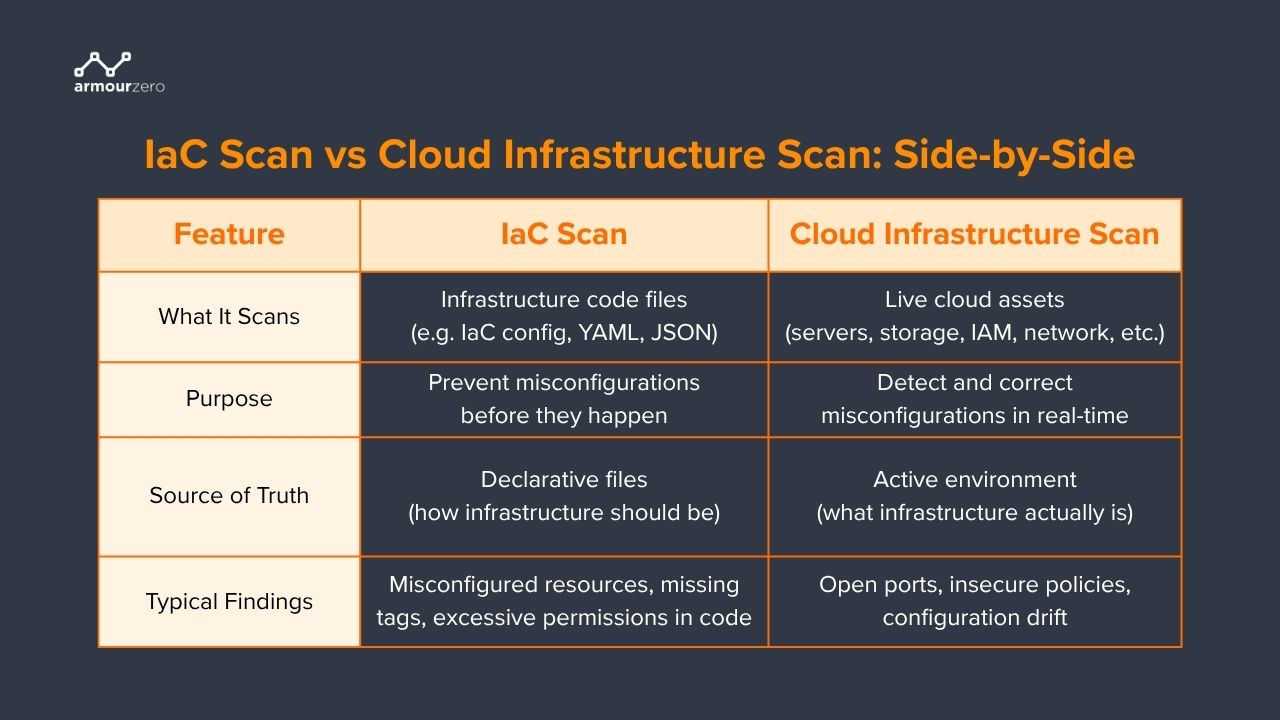
IaC Scan vs Cloud Infrastructure Scan: Side-by-Side
Final Thoughts
Cloud security isn’t a one-time task. It’s a continuous process — starting from infrastructure design (IaC) to real-time monitoring (cloud scan). While your team may not yet be fully integrated with IaC tools like Terraform, you can still implement strong practices by combining pre-deployment checks with continuous infrastructure monitoring.
For DevSecOps teams looking to reduce risks, improve visibility, and move faster — this layered approach is the way forward.
Just Focus on Your Code, We’ll Handle the Security
Start your secure journey with ArmourZero and integrate security effortlessly into your CI/CD pipeline. Enjoy seamless scans, automated checks, and real-time feedback—all while you stay focused on building great software. Start your free account today!

Written by:
Bernadetta Septarini (Content Marketing). Experienced content marketing and social media in the information technology and services industry.
Share this post
Subscribe
Related Posts
What Is Code Security Assessment?
- 30 Sep 2026
- By:Bernadetta Septarini
- Category: ArmourHacks
Learn what Code Security Assessment is, why continuous assessment matters, and how SAST, SCA, SBOM, IaC and Secret Scanning help reduce application risk.

What Is Web Application Security Analysis?
- 24 Sep 2026
- By:Bernadetta Septarini
- Category: ArmourHacks
Learn what web application security is, why it matters, common vulnerabilities, and how organisations can use DAST and vulnerability management to reduce risk.
What Is Automated Vulnerability Management?
- 17 Sep 2026
- By:Bernadetta Septarini
- Category: ArmourHacks
Automated Vulnerability Management continuously discovers, validates, and remediates vulnerabilities across applications. Learn how AVM strengthens security.

Multi-Cloud Security: Managing Risk Across Cloud Infrastructures
- 26 Aug 2026
- By:Bernadetta Septarini
- Category: ArmourHacks
Discover why multi-cloud security is becoming essential and how continuous security monitoring helps organisations manage risk across multiple cloud environments.