Modern applications are built faster than ever before. New features are released weekly, sometimes daily. Cloud services, APIs, open-source components and third-party integrations have become standard.
In this environment, security can no longer be treated as a final checkpoint. It must be part of the entire development process. This is where DevSecOps comes in.
Understanding DevSecOps in Simple Terms
DevSecOps stands for Development, Security and Operations. It is an approach that integrates security into every stage of application development and deployment.
Traditionally, development teams built applications first, operations teams deployed them, and security teams reviewed them at the end. This often led to delays, conflicts and vulnerabilities being discovered too late.
DevSecOps changes this model. Instead of adding security at the end, it embeds security from the start.
In simple terms, DevSecOps means:
- Developers build applications with security in mind.
- Security checks are automated and continuous.
- Operations teams ensure secure deployment and monitoring.
Rather than being a separate function, security becomes a shared responsibility across teams.
Why Traditional Security Models No Longer Work
Modern applications are fundamentally different from traditional software.
They are:
- Built using microservices and APIs.
- Deployed in cloud and container environments.
- Continuously updated through CI/CD pipelines.
- Dependent on open-source and third-party components.
In this context, traditional security approaches struggle to keep up.
Manual security reviews are too slow for rapid release cycles. Vulnerability scanning done only before deployment misses risks introduced later. Security teams often lack visibility into complex application architectures.
As a result, organisations face a growing gap between development speed and security control.
DevSecOps aims to close this gap.
The Business Value of DevSecOps
DevSecOps is not only a technical concept. It is a business strategy that helps organisations manage risk while maintaining innovation.
1. Faster and Safer Releases
By automating security testing within development pipelines, teams can identify issues early without slowing down delivery. Fixing vulnerabilities during development is also significantly cheaper than addressing them after deployment.
2. Reduced Risk of Breaches
Modern breaches often exploit insecure APIs, misconfigurations, vulnerable open-source libraries or overlooked dependencies. DevSecOps improves visibility and control across these areas, reducing the likelihood of critical security incidents.
3. Better Collaboration Across Teams
DevSecOps breaks down silos between development, security and operations. Instead of working in isolation, teams collaborate around shared goals, tools and metrics.
This cultural shift is often as important as the technology itself.
4. Improved Compliance and Governance
With security controls embedded into pipelines, organisations can enforce policies consistently and generate audit evidence automatically. This is particularly valuable for regulated industries.
DevSecOps in Practice: More Than Tools
Many organisations assume DevSecOps is simply about buying security tools. In reality, it requires changes across three key areas.
People
Teams must adopt a shared mindset where security is everyone’s responsibility. Developers need basic security awareness, while security teams must understand development workflows.
Process
Security must be integrated into workflows such as code review, build, testing and deployment. This includes defining risk-based policies rather than relying solely on vulnerability counts.
Technology
Automation plays a central role. Common DevSecOps practices include:
- Static and dynamic application security testing.
- Software composition analysis for open-source risks.
- API security testing.Infrastructure and configuration scanning.
- Continuous monitoring in production.
The goal is not to eliminate risk entirely, but to manage it intelligently.
Why DevSecOps Is Critical for Modern Applications
As applications become more complex and interconnected, the attack surface expands. At the same time, business pressure to deliver faster continues to grow.
DevSecOps addresses this reality by aligning security with speed.
It enables organisations to:
- Innovate without compromising security.
- Prioritise risks that truly matter.
- Build resilience into modern digital services.
In a world where software drives business value, DevSecOps is no longer optional. It is a foundational capability for any organisation building modern applications.
See Application Risk More Clearly
Keeping up with application security in 2026 means having clear visibility across applications, APIs and the cloud infra, without overwhelming your team. If you’d like to see how a more automated approach to vulnerability management works in real environments, you can request a free demo of ArmourZero Automated Vulnerability Management and explore how it helps teams identify real risks, reduce noise and respond faster, all within existing workflows.

Written by:
Bernadetta Septarini (Content Marketing). Experienced content marketing and social media in the information technology and services industry.
Share this post
Subscribe
Related Posts

Multi-Cloud Security: Managing Risk Across Cloud Infrastructures
- 26 Aug 2026
- By:Bernadetta Septarini
- Category: ArmourHacks
Discover why multi-cloud security is becoming essential and how continuous security monitoring helps organisations manage risk across multiple cloud environments.

AI Cyberattacks Are Coming: Is Your Security Ready?
- 18 Aug 2026
- By:Bernadetta Septarini
- Category: ArmourHacks
AI-powered attacks are moving faster. Discover why continuous vulnerability management is essential for organisations preparing for machine-speed cyber threats.

From Periodic Security Audits to Continuous Vulnerability Monitoring
- 22 Jul 2026
- By:Bernadetta Septarini
- Category: ArmourHacks
Discover how continuous vulnerability monitoring complements periodic security audits, helping organisations maintain visibility, prioritise risks and manage vulnerabilities.
Continuous Cloud Security Assessment: Why Once a Year Is No Longer Enough
- 08 Jul 2026
- By:Sean Woo
- Category: ArmourHacks
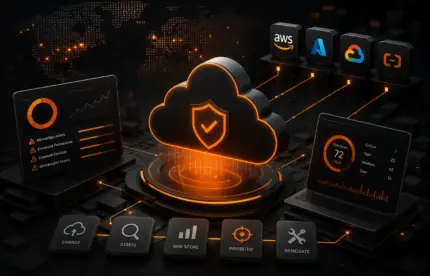
As cloud environments evolve, so do security risks. Continuous cloud security assessments help you stay aware of changes and reduce cyber risk.