The healthcare industry faces an escalating threat landscape, making it a prime target for cyberattacks. Here are five key reasons why healthcare organisations are increasingly vulnerable to online threats:
- Value of Patient Information: Hospitals store vast amounts of sensitive patient data, making them lucrative targets for cybercriminals seeking to profit from stolen medical records. The introduction of regulations like GDPR has heightened the urgency for healthcare providers to secure patient information against breaches and ransomware attacks.
- Vulnerability of Medical Devices: Modern healthcare relies heavily on interconnected medical devices such as x-rays and infusion pumps. While these devices enhance patient care, they often lack robust security measures, serving as potential entry points for cyberattacks. Attackers can exploit vulnerabilities in these devices to gain access to sensitive networks and disrupt critical healthcare operations.
- Remote Access Challenges: Healthcare professionals frequently need to access patient data remotely from various devices. This demand for remote access increases the attack surface, as not all devices may adhere to stringent security protocols. This scenario underscores the importance of solutions like risk-based authentication (RBA) to mitigate the risks associated with remote access.
- Workforce Education Gap: Healthcare staff, focused on patient care, may lack awareness of cybersecurity best practices. This knowledge gap leaves healthcare organisations vulnerable to phishing attacks and other social engineering tactics. Solutions like multi-factor authentication (MFA) offer effective safeguards by adding layers of security without burdening staff with complex security procedures.
- Proliferation of Connected Devices: Healthcare environments encompass a multitude of connected devices, ranging from patient monitoring systems to administrative tools. Managing the security of these devices poses a significant challenge, particularly in smaller healthcare settings with limited resources. Implementing scalable cybersecurity solutions, such as MFA, can help mitigate risks across diverse device ecosystems.
Strengthening Healthcare Security with ArmourZero
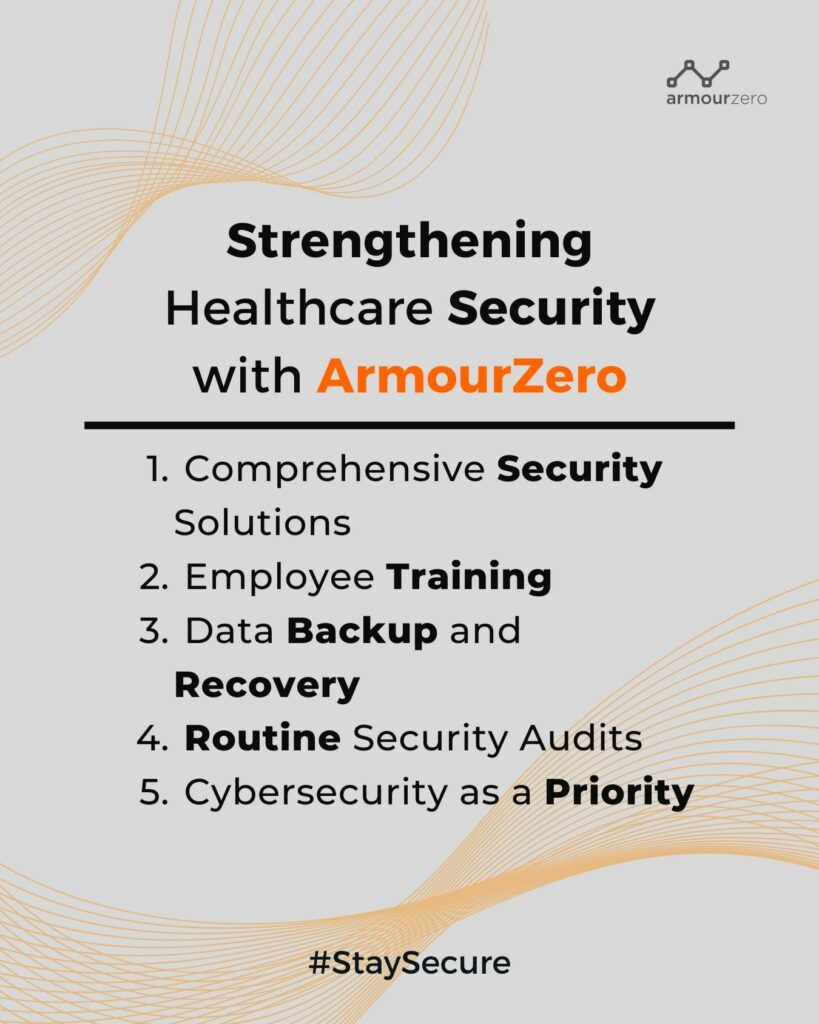 In the face of escalating cyber threats, healthcare organisations can fortify their defences using proactive strategies and cutting-edge solutions like ArmourZero. Here’s how healthcare providers can protect themselves:
1. Comprehensive Security Solutions
Adopt ArmourZero’s ITSecOps platform, ShieldOne, which provides a unified approach to cybersecurity. ShieldOne offers multi-layered defence mechanisms, including robust endpoint protection and advanced email security. These measures ensure comprehensive protection against evolving cyber threats targeting healthcare data.
2. Employee Training
Regularly educate healthcare staff on cybersecurity best practices through ongoing training sessions. This empowers employees to recognize and respond effectively to potential threats such as phishing attacks and unauthorised data access attempts. By enhancing staff awareness, healthcare organisations can significantly reduce the risk of human error contributing to security breaches.
3. Data Backup and Recovery
Implement stringent data backup and recovery protocols with ArmourZero’s solutions. This ensures that critical patient information and operational data are securely backed up and readily recoverable in the event of a ransomware attack or data breach. Reliable backups minimise downtime and financial losses, enabling healthcare providers to maintain continuity of care without compromising patient confidentiality.
4. Routine Security Audits
Conduct regular security audits using ArmourZero’s auditing capabilities to proactively identify and remediate vulnerabilities within the IT infrastructure. By staying ahead of potential security gaps, healthcare organisations can enhance their overall cybersecurity resilience and mitigate the likelihood of successful cyberattacks.
5. Cybersecurity as a Priority:
Emphasise cybersecurity as a top organisational priority to foster a culture of vigilance and accountability across all levels of the healthcare institution. By embedding cybersecurity practices into daily operations and strategic planning, healthcare providers can safeguard patient data integrity and uphold trust within their communities.
In an era where digital threats continue to evolve, ArmourZero equips healthcare organisations with the tools and expertise needed to defend against cyber risks effectively. By investing in proactive security measures and leveraging advanced technologies, healthcare providers can uphold their commitment to patient care while safeguarding sensitive data from malicious actors.

Written by:
Fanny Fajarianti (Performance Marketing). Experienced digital marketer in the information technology and services industry.
Share this post
Subscribe
Related Posts

Multi-Cloud Security: Managing Risk Across Cloud Infrastructures
- 26 Aug 2026
- By:Bernadetta Septarini
- Category: ArmourHacks
Discover why multi-cloud security is becoming essential and how continuous security monitoring helps organisations manage risk across multiple cloud environments.

AI Cyberattacks Are Coming: Is Your Security Ready?
- 18 Aug 2026
- By:Bernadetta Septarini
- Category: ArmourHacks
AI-powered attacks are moving faster. Discover why continuous vulnerability management is essential for organisations preparing for machine-speed cyber threats.

From Periodic Security Audits to Continuous Vulnerability Monitoring
- 22 Jul 2026
- By:Bernadetta Septarini
- Category: ArmourHacks
Discover how continuous vulnerability monitoring complements periodic security audits, helping organisations maintain visibility, prioritise risks and manage vulnerabilities.
Continuous Cloud Security Assessment: Why Once a Year Is No Longer Enough
- 08 Jul 2026
- By:Sean Woo
- Category: ArmourHacks
As cloud environments evolve, so do security risks. Continuous cloud security assessments help you stay aware of changes and reduce cyber risk.