In 2024, we have witnessed the massive growth of applications and AI. A study found that an average of 1,240 new apps are released on Google Play every day. This staggering number highlights how many new applications are entering the digital ecosystem. However, amidst the rush to launch, developers often prioritise release schedules over security considerations. Meanwhile, code security is now more critical than ever, as hackers and AI-based threats continue to evolve.
That’s why it’s essential to take a step back and ensure our applications are built on secure foundations. Let’s dive into the top 8 code security checklist items to help you build secure applications in 2025.
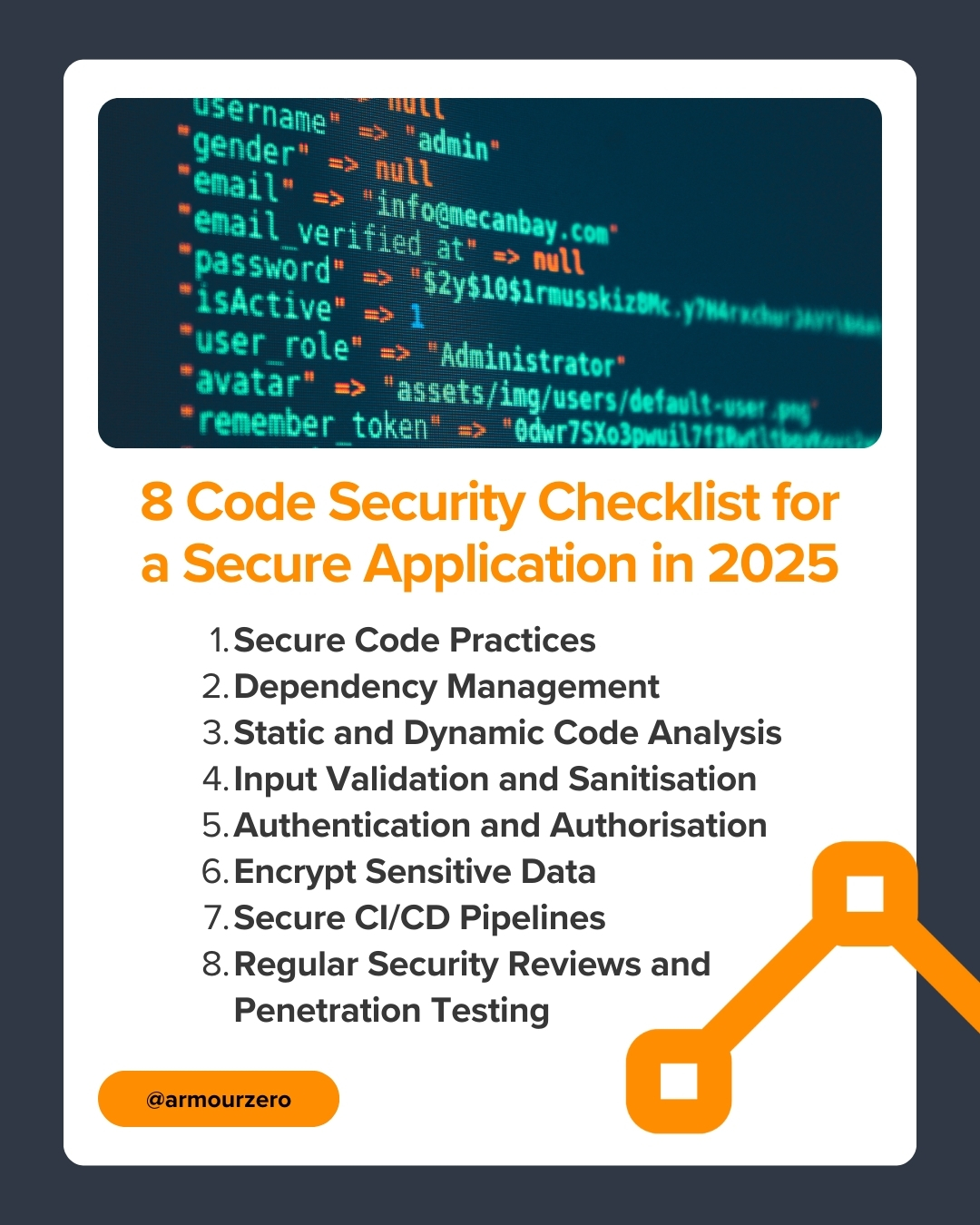
1. Secure Code Practices
Adopt secure coding standards from the start. Follow guidelines like OWASP Secure Coding Practices and train your team to identify common vulnerabilities such as SQL injection, cross-site scripting (XSS), and buffer overflows. Writing secure code is a proactive step that pays off in the long run.
2. Dependency Management
Third-party libraries and frameworks are a staple of modern development. However, they can introduce vulnerabilities if not managed properly. Regularly audit your dependencies, use tools like Snyk or Dependabot, and ensure you’re always running the latest secure versions.
3. Static and Dynamic Code Analysis
Implement both static application security testing (SAST) and dynamic application security testing (DAST) tools. SAST tools analyse your codebase to catch vulnerabilities early, while DAST tools simulate attacks on a running application to uncover runtime issues. Together, they provide comprehensive coverage.
4. Input Validation and Sanitisation
Untrusted input is one of the easiest ways for attackers to exploit your application. Always validate and sanitise user inputs, even when they come from seemingly safe sources. This helps prevent injection attacks and data corruption.
5. Authentication and Authorisation
Enforce strong authentication and proper authorisation mechanisms. Use modern frameworks that support secure password storage, multi-factor authentication (MFA), and role-based access control (RBAC). Ensure sensitive actions require elevated permissions.
6. Encrypt Sensitive Data
Encryption isn’t optional. Protect sensitive data both at rest and in transit using strong encryption protocols like AES-256 and TLS 1.3. Don’t forget to securely manage your encryption keys using tools like AWS KMS or HashiCorp Vault.
7. Secure CI/CD Pipelines
Your CI/CD pipelines are an attractive target for attackers. Secure them by:
- Restricting access to build environments.
- Scanning for secrets in your repositories.
- Implementing pipeline-level security checks, such as automated testing and linting.
8. Regular Security Reviews and Penetration Testing
Code reviews and penetration testing should be a regular part of your development lifecycle. Invite external experts to conduct audits and penetration tests to uncover vulnerabilities your team might overlook. Continuous monitoring and testing ensure your application remains secure against emerging threats.
By incorporating these practices into your development process, you’ll not only protect your applications but also gain the trust of your users. Remember, security is not a one-time effort; it’s a continuous journey. As developers, IT managers, and QA professionals, we have the power to build safer applications for everyone.
So, let’s code responsibly and make 2025 a year of secure innovation!
Just Focus on Your Code, We’ll Handle the Security
Start your secure journey with ScoutTwo and integrate security effortlessly into your CI/CD pipeline. Enjoy seamless scans, automated checks, and real-time feedback—all while you stay focused on building great software. Start your free account today!

Written by:
Bernadetta Septarini (Content Marketing). Experienced content marketing and social media in the information technology and services industry.
Share this post
Subscribe
Related Posts

Multi-Cloud Security: Managing Risk Across Cloud Infrastructures
- 26 Aug 2026
- By:Bernadetta Septarini
- Category: ArmourHacks
Discover why multi-cloud security is becoming essential and how continuous security monitoring helps organisations manage risk across multiple cloud environments.

AI Cyberattacks Are Coming: Is Your Security Ready?
- 18 Aug 2026
- By:Bernadetta Septarini
- Category: ArmourHacks
AI-powered attacks are moving faster. Discover why continuous vulnerability management is essential for organisations preparing for machine-speed cyber threats.

From Periodic Security Audits to Continuous Vulnerability Monitoring
- 22 Jul 2026
- By:Bernadetta Septarini
- Category: ArmourHacks
Discover how continuous vulnerability monitoring complements periodic security audits, helping organisations maintain visibility, prioritise risks and manage vulnerabilities.
Continuous Cloud Security Assessment: Why Once a Year Is No Longer Enough
- 08 Jul 2026
- By:Sean Woo
- Category: ArmourHacks
As cloud environments evolve, so do security risks. Continuous cloud security assessments help you stay aware of changes and reduce cyber risk.